Pages

Highlight Of Last Week

Search This Website

Saturday, 20 August 2016

Armenia

Armenia (Listeni/ɑːrˈmiːniə/,/ - ˈmiːnjə/;[19] Armenian: Հայաստան, tr. Hayastan, IPA: [hɑjɑsˈtɑn][a]), formally the Republic of Armenia (Armenian: Հայաստանի Հանրապետություն, tr. Hayastani Hanrapetut'yun), is a sovereign state in the South Caucasus locale of Eurasia. Situated in Western Asia,[20][21] on the Armenian Highland, it is circumscribed by Turkey toward the west, Georgia toward the north, the true autonomous Nagorno-Karabakh Republic and Azerbaijan toward the east, and Iran and Azerbaijan's exclave of Nakhchivan toward the south. The Republic of Armenia constitutes stand out tenth of chronicled Armenia.[22]

Armenia is a unitary, multi-party, popularity based country state with an old social legacy. Urartu was built up in 860 BC and by the sixth century BC it was supplanted by the Satrapy of Armenia. In the first century BC the Kingdom of Armenia achieved its stature under Tigranes the Great. Armenia turned into the primary state on the planet to embrace Christianity as its authority religion.[23] in the middle of the late third century to early years of the fourth century, the state turned into the principal Christian nation.[24][25][26] The official date of state appropriation of Christianity is 301 AD.[27] The old Armenian kingdom was part between the Byzantine and Sasanian Empires around the mid fifth century. Under the Bagratuni line, the Bagratid Kingdom of Armenia was reestablished in the ninth century. Declining because of the wars against the Byzantines, the kingdom fell in 1045 and Armenia was not long after attacked by the Seljuk Turks. An Armenian territory and later a kingdom Cilician Armenia was situated on the bank of the Mediterranean Sea between the eleventh and fourteenth hundreds of years.

Between the sixteenth century and nineteenth century, the conventional Armenian country made out of Eastern Armenia and Western Armenia went under the standard of the Ottoman and Iranian realms, more than once led by both of the two throughout the hundreds of years. By the nineteenth century, Eastern Armenia had been vanquished by the Russian Empire, while the vast majority of the western parts of the customary Armenian country stayed under Ottoman standard. Amid World War I, Armenians living in their familial grounds in the Ottoman Empire were methodicallly eliminated in the Armenian Genocide. In 1918, after the Russian Revolution, all non-Russian nations announced their freedom after the Russian Empire stopped to exist, prompting the foundation of the First Republic of Armenia. By 1920, the state was joined into the Transcaucasian Socialist Federative Soviet Republic, and in 1922 turned into an establishing individual from the Soviet Union. In 1936, the Transcaucasian state was broken down, changing its constituent states, including the Armenian Soviet Socialist Republic, into full Union republics. The present day Republic of Armenia got to be free in 1991 amid the disintegration of the Soviet Union.

The Republic of Armenia perceives the Armenian Apostolic Church, the world's most established national church, as the nation's essential religious establishment.[28][29] The one of a kind Armenian letters in order was designed by Mesrop Mashtots in 405 AD.

Armenia is an individual from the Eurasian Economic Union, the Council of Europe and the Collective Security Treaty Organization. Armenia underpins the true free Nagorno-Karabakh Republic, which was broadcasted in 1991.
Read More »

Argentina

Argentina (Listeni/ˌɑːrdʒənˈtiːnə/; Spanish: [aɾxenˈtina]), formally the Argentine Republic[A] (Spanish: República Argentina), is a government republic situated in southeastern South America. Sharing the main part of the Southern Cone with its neighbor Chile toward the west, the nation is additionally circumscribed by Bolivia and Paraguay toward the north, Brazil toward the upper east, Uruguay and the South Atlantic Ocean toward the east, and the Drake Passage toward the south. With a terrain region of 2,780,400 km2 (1,073,500 sq mi),[B] Argentina is the eighth-biggest nation on the planet, the second biggest in Latin America, and the biggest Spanish-talking one. The nation is subdivided into twenty-three areas (Spanish: provincias, particular provincia) and one independent city (ciudad autónoma), Buenos Aires, which is the government capital of the country (Spanish: Capital Federal) as chose by Congress.[10] The territories and the capital have their own constitutions, however exist under an elected framework.

Argentina claims sway over some portion of Antarctica, the Falkland Islands (Spanish: Islas Malvinas), South Georgia and the South Sandwich Islands. The most punctual recorded human nearness in the range of current Argentina goes back to the Paleolithic period.[11] The nation has its roots in Spanish colonization of the district amid the sixteenth century.[12] Argentina ascended as the successor condition of the Viceroyalty of the Río de la Plata,[13] a Spanish abroad viceroyalty established in 1776. The assertion and battle for freedom (1810–1818) was trailed by a developed common war that kept going until 1861, coming full circle in the nation's redesign as an alliance of territories with Buenos Aires as its capital city. The nation from that point delighted in relative peace and solidness, with monstrous rushes of European movement drastically reshaping its social and demographic viewpoint. The nearly unparalleled expansion in flourishing prompted Argentina turning into the seventh wealthiest created country on the planet by the mid twentieth century.[14][15]

After 1930 Argentina plunged into political shakiness and occasional monetary emergency that pushed it over into underdevelopment,[16] however it by the by stayed among the fifteen wealthiest nations until the mid-twentieth century.[14] Argentina holds its memorable status as a center power[17] in global undertakings, and is an unmistakable provincial influence in the Southern Cone and Latin America.[18][19] Argentina has the second biggest economy in South America, the third-biggest in Latin America and is an individual from the G-15 and G-20 noteworthy economies. It is additionally an establishing individual from the United Nations, World Bank, World Trade Organization, Mercosur, Union of South American Nations, Community of Latin American and Caribbean States and the Organization of Ibero-American States. It is the nation with the most astounding Human Development Index in Latin America with a rating of "extremely high".[9] Because of its strength, market size and developing cutting edge sector,[20] Argentina is delegated a high-pay econom
Read More »

Antigua and Barbuda


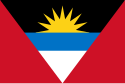
ntigua and Barbuda (Listeni/ænˈtiːɡə ənᵈ bɑːrˈbjuːdə/; a TEE-gǝ ǝnd bar-BYOO-dǝ;) is a twin-island nation in the Americas, lying between the Caribbean Sea and the Atlantic Ocean. It comprises of two noteworthy possessed islands, Antigua and Barbuda, and various littler islands (counting Great Bird, Green, Guinea, Long, Maiden and York Islands and further south, the island of Redonda). The lasting populace numbers around 81,800 (at the 2011 Census) and the capital and biggest port and city is St. John's, on Antigua.

Isolated by a couple of nautical miles, Antigua and Barbuda are amidst the Leeward Islands, part of the Lesser Antilles, generally at 17°N of the equator. The nation's name was given by Christopher Columbus in 1493 subsequent to finding the island, out of appreciation for the Virgin of La Antigua in the Seville Cathedral. The nation is nicknamed "Place that is known for 365 Beaches" because of the numerous shorelines encompassing the islands. Its administration, dialect, and society have all been emphatically impacted by the British Empire, of which the nation was once in the past a section.

Read More »

Angola

Angola/æŋˈɡoʊlə/, formally the Republic of Angola (Portuguese: República de Angola proclaimed: [ɐ̃ˈɡɔlɐ]; Kikongo, Kimbundu and Umbundu: Repubilika ya Ngola), is a nation in Southern Africa. It is the seventh-biggest nation in Africa, and is circumscribed by Namibia toward the south, the Democratic Republic of the Congo toward the north and east, Zambia toward the east, and the Atlantic Ocean to west. The exclave region of Cabinda has fringes with the Republic of the Congo and the Democratic Republic of the Congo. The capital and biggest city of Angola is Luanda.

In spite of the fact that its domain has been possessed following the Paleolithic Era, advanced Angola starts in Portuguese colonization, which started with, and was for quite a long time constrained to, beach front settlements and exchanging posts built up starting in the sixteenth century. In the nineteenth century, European pilgrims gradually and reluctantly started to set up themselves in the inside. As a Portuguese settlement, Angola did not incorporate its present fringes until the mid twentieth century, taking after resistance by gatherings, for example, the Cuamato, the Kwanyama and the Mbunda. Autonomy was accomplished in 1975 after the extended freedom war. That same year, Angola dropped into an extraordinary common war that kept going until 2002. It has subsequent to end up a generally stable unitary presidential republic.

Angola has unfathomable mineral and petroleum stores, and its economy is among the quickest developing on the planet, particularly since the end of the common war. Despite this, the way of life stays low for most of the populace, and future and newborn child death rates in Angola are among the most exceedingly bad in the world.[5] Angola's monetary development is very uneven, with most of the country's riches amassed in an excessively little division of the population.[6]

Angola is a part condition of the United Nations, OPEC, African Union, the Community of Portuguese Language Countries, the Latin Union and the Southern African Development Community. A very multiethnic nation, Angola's 24.3 million individuals traverse different tribal gatherings, traditions, and conventions. Angolan society reflects hundreds of years of Portuguese principle, to be specific in the power of the Portuguese dialect and Roman Catholicism, consolidated with assorted indigenous impacts.
Read More »

Andorra

Andorra (Listeni/ænˈdɔːrə/; Catalan: [ənˈdorə], locally: [anˈdɔra]), formally the Principality of Andorra (Catalan: Principat d'Andorra), likewise called the Principality of the Valleys of Andorra[5] (Catalan: Principat de les Valls d'Andorra), is a sovereign landlocked microstate in Southwestern Europe, situated in the eastern Pyrenees mountains and circumscribed by Spain and France. Made under a sanction in 988, the present territory was framed in 1278. It is referred to as a realm as it is a government headed by two Co-Princes – the Roman Catholic Bishop of Urgell in Spain, and the President of France.

Andorra is the 6th littlest country in Europe, having a territory of 468 km2 (181 sq mi) and a populace of roughly 85,000.[1] Its capital Andorra la Vella is the most elevated capital city in Europe, at a height of 1,023 meters (3,356 ft) above ocean level.[6] The official dialect is Catalan, albeit Spanish, Portuguese, and French are likewise regularly spoken.[1][7]

Andorra's tourism benefits an expected 10.2 million guests annually.[8] It is not an individual from the European Union, but rather the euro is the official cash. It has been an individual from the United Nations since 1993.[9] In 2013, the general population of Andorra had the most noteworthy future on the planet at 81 years, as per The Lancet.
Read More »

Algeria

Algeria (Arabic: الجزائر‎‎ al-Jazā'ir; Berber: Dzayer, ; French: Algérie), authoritatively the People's Democratic Republic of Algeria, is a sovereign state in North Africa on the Mediterranean coast. Its capital and most crowded city is Algiers, situated in the nation's far north. With a region of 2,381,741 square kilometers (919,595 sq mi), Algeria is the tenth-biggest nation on the planet, and the biggest in Africa.[14] Algeria is flanked toward the upper east by Tunisia, toward the east by Libya, toward the west by Morocco, toward the southwest by the Western Saharan region, Mauritania, and Mali, toward the southeast by Niger, and toward the north by the Mediterranean Sea. The nation is a semi-presidential republic comprising of 48 areas and 1,541 cooperatives (districts). Abdelaziz Bouteflika has been President since 1999.

Antiquated Algeria has known numerous domains and administrations, including old Numidians, Phoenicians, Carthaginians, Romans, Vandals, Byzantines, Umayyads, Abbasids, Idrisid, Aghlabid, Rustamid, Fatimids, Zirid, Hammadids, Almoravids, Almohads, Ottomans and the French pioneer realm. Berbers are for the most part thought to be the indigenous tenants of Algeria. Taking after the Arab triumph of North Africa, most indigenous tenants were Arabised; hence, albeit most Algerians are Berber in root, most relate to Arab personality. All at once, Algerians are a blend of Berbers with some extra components, for example, Arabs, Turks and Andalusians (individuals from southern Spain who moved after the reconquista).

Algeria is a provincial and center force. The North African nation supplies a lot of common gas to Europe, and vitality fares are the foundation of the economy. As indicated by OPEC Algeria has the seventeenth biggest oil saves on the planet and the second biggest in Africa, while it has the ninth biggest stores of common gas. Sonatrach, the national oil organization, is the biggest organization in Africa. Algeria has one of the biggest militaries in Africa and the biggest barrier spending plan on the landmass; the greater part of Algeria's weapons are transported in from Russia, with whom they are a nearby ally.[15][16] Algeria is an individual from the African Union, the Arab League, OPEC, the United Nations and is the establishing individual from the Maghreb Union.
Read More »

About Albania

Home of both Mother Theresa and the great 15th Century hero Skanderbeg, Albania is located in Southeastern Europe bordering the Adriatic Sea and Ionian Sea, between Montenegro and Kosovo in the north, Macedonia in the east and Greece in the south.

Albanian history and culture is fascinating. Butrint, one of the world's archeological wonders - and a UNESCO World Heritage site - in the south of Albania provides a glimpse of Mediterranean civilization from the Bronze Age through the Greek, Roman, Byzantine, Venetian and Ottoman periods - all atop a cliff overlooking Corfu.

Throughout the transition period Albania has been faced with a number of extremely complex challenges in order to establish stable institutions guaranteeing democracy, the rule of law and human rights as well as to operate a functioning market economy and to cope with competition and market forces.


Albania has enjoyed a high sustained rate of economic growth over the past several years, averaging about 5–6 per cent per year, placing Albania into the group of countries with a high Human Development Index (HDI).

Albania represents a considerable market in the region due to several agreements on free trade with neighbor countries and European Union, as well as an attractive investment destination.
 

History


Albania declared its independence from the Ottoman Empire in 1912 but till the end of the First World War, the country was attacked by neighboring countries.

In 1925, the Constitutional Assembly declared Albania a Parliamentary Republic and Ahmet Zog was elected President of Albania, but he had so much power in his hands that, in fact, the Republic functioned as a Presidential one. After three years Albania Ahmet Zog was declared the King of Albania, receiving the royal title "Zog I".

After eleven years of monarchy the country was occupied by Mussolini forces in 1939, putting the end of monarchy. In 1943 the armies of Hitler occupies the country. The resistance against foreign invasion was known as the Anti – Fascist National Liberation front. The Communist party took power in November 1944, when the foreign armies were expelled. Shortly thereafter, a totalitarian regime was established under the communist leader Enver Hoxha.

For about 50 years, the regime applied the policy of self-isolation, leaving the country in great economic poverty when it finally emerged from isolation in 1991. The principle of self-reliance applied by the Communist regime prohibited foreign loans, credits and investment.

Challenges


The most visible and the most pressing challenge for Albania is meeting the requirements of the European Union (EU) accession.

The country has made significant progress toward European Union (EU) integration, measured primarily in terms of meeting political criteria and establishing stable institutions that guarantee democracy, rule of law, human rights, protection of minorities, regional cooperation and good relations with enlargement countries and Member States.

Challenges related to social inclusion are intimately linked to Albania’s longer-term economic and social development goals, which are part of most of the sectoral and crosscutting strategies reflected in the National Strategy for Development and Integration.

While, growth has led to poverty reduction, disparities persist among regions of the country, with the mountainous areas in particular lagging behind.


Successes


Albanians celebrating 100 years of independence. photo: roland tasho
Albania has made progress in its democratic development since first holding multiparty elections in 1991.
European and Euro-Atlantic integration, along with rapid and sustainable growth remain the overarching goals for Albania.
On 18 February 2008 the Council adopted a new European partnership with Albania. The Stabilisation and Association Agreement (SAA)  with the country was signed on 12 June 2006 and entered into force on 1 April 2009.The EU-Albania visa facilitation agreement entered into force in January 2008.
Albania joined NATO in April 2009. Albania  received the EU candidate status in 2013- a major step towards achievement of the country's European aspirations.
In 2014, the Government in partnership with a number of international and national partners, including UNDP, undertook a transformative Administrative and Territorial Reform which consolidated the country's 373 local government units into 61.This marked a milestone towards creating a local governance system which is critical for Albania's European Integration.
Read More »

Afghanistan: An Introduction

Afghanistan: An Introduction

by Abdullah Qazi
Last updated: January 6, 2016

Afghanistan, (which literally means Land of the Afghan) is a mountainous land-locked country located in Central Asia. It has a history and culture that goes back over 5000 years. Throughout its long, splendid, and sometimes chaotic history, this area of the world has been known by various names. In ancient times, its inhabitants called the land Aryana. In the medieval era, it was called Khorasan, and in modern times, its people have decided to call it Afghanistan. The exact population of Afghanistan is unknown, however, it is estimated to be somewhere around 32.5 million.
Afghanistan is a heterogeneous nation, in which there are four major ethnic groups: Pashtoons, Tajiks, Hazaras, and Uzbeks. Numerous other minor ethnic groups (Nuristanis, Baluchis, Turkmens, etc.) also call Afghanistan their home. While the majority of Afghans (99%) belong to the Islamic faith, there are also small numbers of Sikhs. The official languages of the country are Pashto and Dari (Afghan Persian aka Farsi). The capital of Afghanistan is Kabul, which throughout history, was admired by many great figures, such as the great Central Asian conqueror, Zahirudeen Babur. Unfortunately, due to many years of war, this great city was nearly completely destroyed. Today, it is over crowded.
Afghanistan Today
In late 2001, the Taliban were removed from power, and an interim government was created, and Hamid Karzai was chosen to lead it. Since then, parliamentary and presidential elections have been held. Hamid Karzai won the first two presidential elections, and Ashraf Ghani won the most recent one, defeating challenger Abdullah Abdullah.
Today, Afghanistan is on a road to recovery, and things have gotten a lot better since the Taliban were removed from power. However, the country still has a long way to go - corruption is a big issue, as well as the continual war with extremist militant groups (supported by outside forces) trying to take over the country. The Taliban are still conducting attacks in Afghanistan, and have managed to temporarily capture districts and even a major city. Now, ISIS (DAESH) has started operations in Afghanistan, and their fighters are waging war not just against the Afghan government, but the Taliban as well.
Read More »